
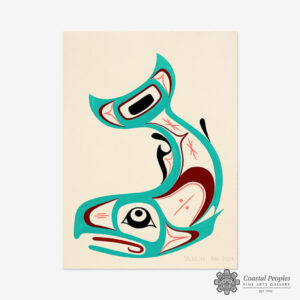
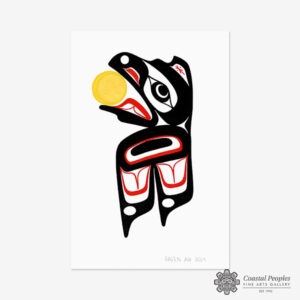
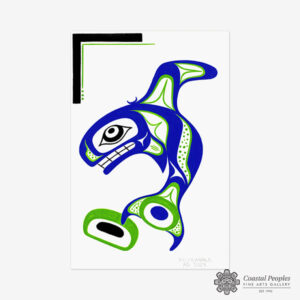
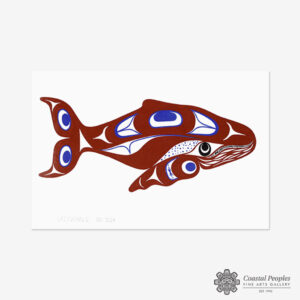
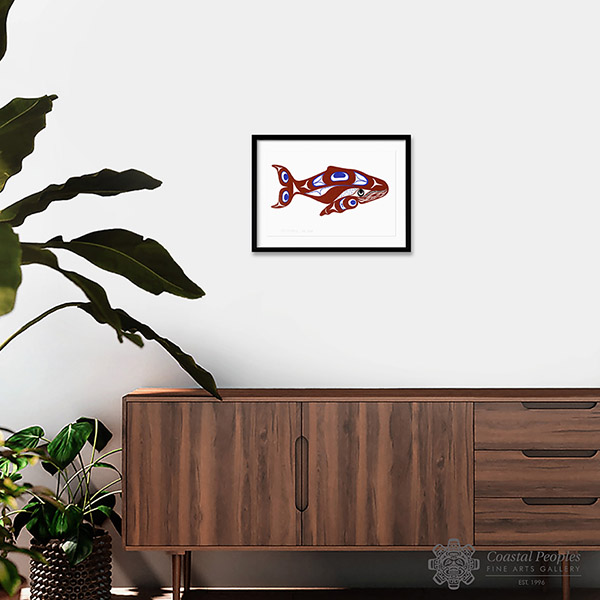
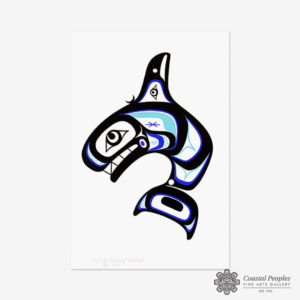
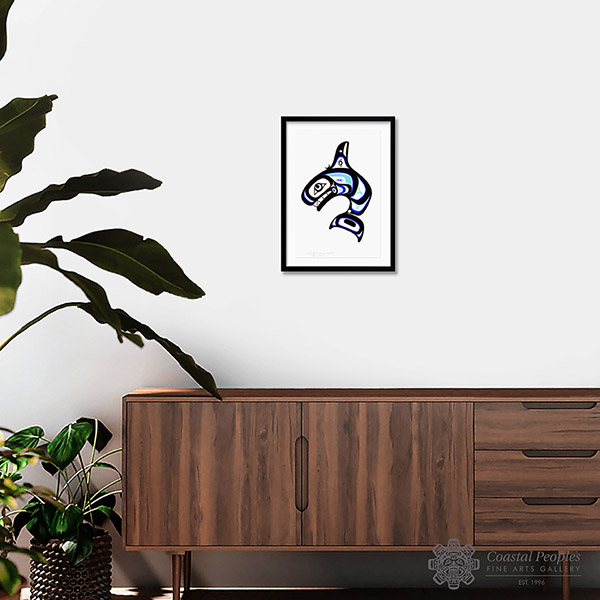
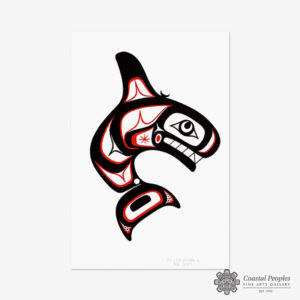

Walter Harris was born to Chris and Clara Harris in Kispiox and is a member of the Gitskan Nation located in northern British Columbia, Canada. In 1957 Walter received his uncle’s Hereditary Chief name “Geel”. Receiving this name and its responsibilities established him as the recognized head Chief of Kispiox. Walter and his wife, Sadie have five children, twenty grandchildren and three great grandchildren. His two sons have carried on the carving tradition and have learned and worked with him on several projects.
While taking part in the construction of a replica of the Gitskan Village now known as ‘Ksan, Walter was intrigued by the forms and symbolism of Northwest Coast Indian Art. This awakened interest led him to want to learn more so he enrolled in the newly formed Kitanmaax School of Northwest Coast Indian Art in 1969. He studied and mastered jewelry making under Jack Leyland, wood carving under Duane Pasco and Doug Crammer, and attended seminars on Northwest Coast Graphic design given by Bill Holm.
Walter eventually developed his talents to the point of being named senior instructor of wood sculpture at ‘Ksan, a post which he proudly held from 1972 to 1985. As Walter mastered his art he created his own unique style, which he adhered closely to Goatskin Tradition. He keeps rubbings of all his jewelry to ensure that each engraving is “one of a kind”.
Throughout the years numerous select pieces of his have found their way into publications and private collections of well-known authorities and collectors in Northwest Coast Art from many countries around the world. A highlight of his art career came in 1978 when he was appointed to the Fine Arts Committee of Canada, which selects significant artifacts to be purchased by the Federal Government of Canada. The curriculum vitae is a collection of his major accomplishments but there are numerous pieces that are in the homes of private collectors and individuals throughout the world. They recognize and respect his creations as major art pieces in wood, limestone, jewelry making and in silk screen prints. Art is extremely necessary to the Gitskan people. It is through art: traditional dances and dramas were held, masks were carved, houses painted, ceremonial regalia such as button blankets, headdresses, rattles, bowls, puppets and even songs were created.